

I first came across your work in 2018 while researching 21st-century Chilean photobooks. Your book, A Way to Disconnect and Connect (Ediciones Daga, 2017), was a great surprise to me, as it offered a different perspective on photography practiced in Chile then. Since then, you have continued publishing and now have eight books. In addition, you work as an editorial designer and co-founder—along with artists Abbey Meaker and Estefania Puerta—of Another Earth, an editorial project specializing in art. What role does the book, as a medium, play in your photographic practice?
For me, the book is the most important medium for photographic work. Many aspects of it interest me. The most significant contribution it makes to my photographic practice is that it allows me to engage in an active process of exploration with printed material, where photographic, graphic, and authorial practices intertwine.
In my editorial design practice, I participate in projects as a designer and, on occasion, as an editor. This collaborative process is essential, as it fosters continuous learning with authors who may not work in the same way as I do but always, in one way or another, enrich my process.
I am also interested in books because of their democratizing nature. From the author’s perspective, they offer an accessible medium for creation, exploration, and expression. From the reader’s perspective, they serve as an accessible gateway to art. I am also interested in their permanence over time and the way these works come to life and change with you (as author and reader). Of course, there are different types of books: some are more ambiguous, inviting personal interpretation, while others are more narrative or documentary, guiding the reader’s experience more directly. Regardless of the context, both the story itself and your personal history can be shaped by the way you engage with them. For me, having daily access to books is essential.
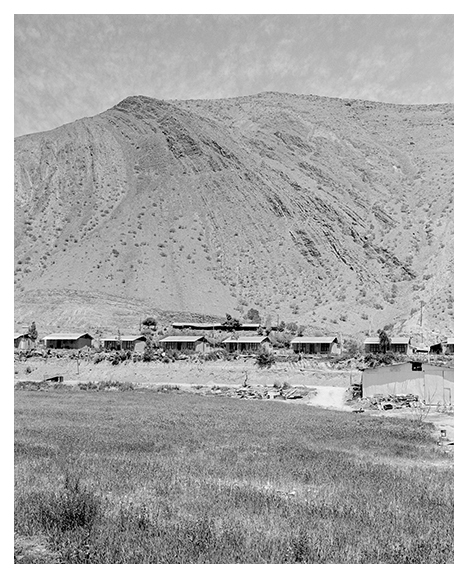
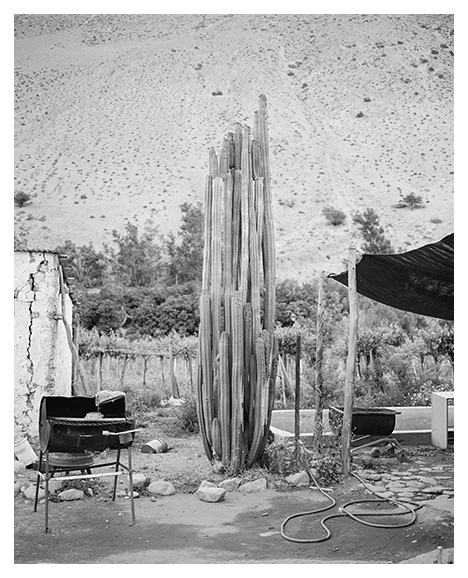
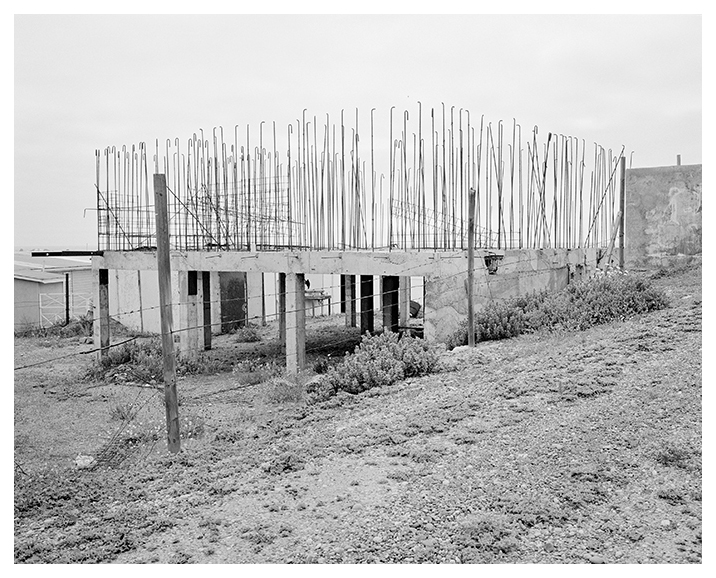
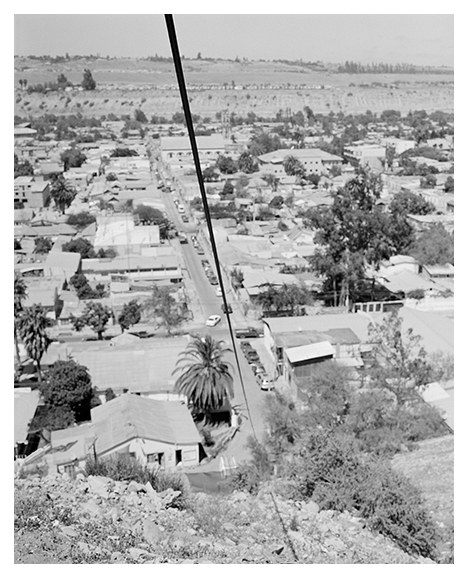
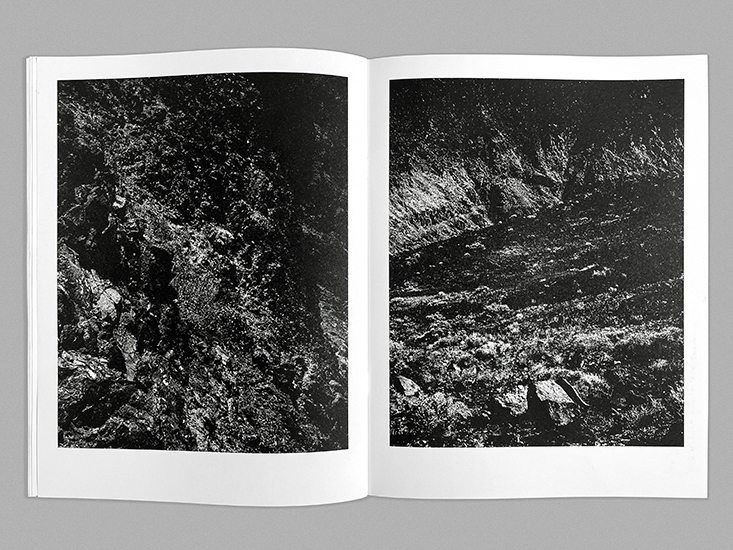
You began working in Valle in 2022 in collaboration with a research project from Athabasca University (Canada), which “focuses on the communities of Valle de Huasco (located south of the Atacama Desert) and their territories, aiming to understand the logic of development and the potential role of multinational corporations in it.” In the photographs of this project, I perceive a complex and conflicted space with an abandoned appearance. What role do your images play within the research project? And why did you choose to focus exclusively on the territory, avoiding human presence through portraiture?
The project encompasses two perspectives: an academic one, led by Dr. Eduardo Ordoñez-Ponce, Associate Professor at the Faculty of Business at Athabasca University (Canada), who oversees the research, and an artistic one, carried out by me. While both perspectives evolve in parallel and engage in a dynamic dialogue, they are not necessarily interdependent.
The academic research is the intellectual property of Eduardo Ordoñez-Ponce and is funded by Athabasca University. My research and artistic creation, on the other hand, are my intellectual property, supported by grants from the Canada Council for the Arts and the Toronto Arts Council, as well as being partially self-funded. This photographic work has also gained recognition through the Urbanautica Institute Awards in Italy, where in 2022, Valle won in the Nature, Environment, and Perspectives category. Additionally, it received sponsorship for exhibition and presentation at Rencontres de la photographie en Gaspésie in Québec. These acknowledgments play a fundamental role in showcasing the project, fostering debate, and contributing to its ongoing development.
When photographing, academic research partially shapes my way of seeing the territory, influencing certain photographic decisions. However, the photographic works do not document or directly reflect the results of this research. The academic research process takes place on-site through a series of interviews with different people from the region—activists, councilors, journalists, miners, businessmen, and others. I participate in recording some of these interviews, which are coordinated by Eduardo Ordoñez-Ponce. At the same time, he observes my photographic work, which develops in parallel as we both visit the Atacama Desert.
Eduardo Ordoñez-Ponce’s experience in the subject is invaluable, and his research is based on hard data, while my work is more interpretive and ambiguous, it conveys sensations associated with conversations from the interviews, the research process, and observations of the territory.
Through this approach, the photographic work is articulated. It has been exhibited and published alongside a text by Ordoñez-Ponce. On other occasions, some photographs from the series have been included in academic presentations and conferences that he conducts, providing a visual context to the research. However, his work ultimately results in academic papers that do not necessarily incorporate photographs.
Broadly speaking, my focus is on human presence in the territory, the interventions, and their effects. However, I have no intention of including portraits in the project, as doing so would require more time and the development of relationships with the inhabitants. At the same time, I feel that portraits would shift the perspective of the work—though I might explore incorporating details of the human body at some point.
The structure of this journey also shaped my approach, influencing where I directed my attention in terms of time, equipment, movement, and actions, all of which were organized around the interview schedule. As a result, walking through the territory became a fundamental aspect of these experiences.
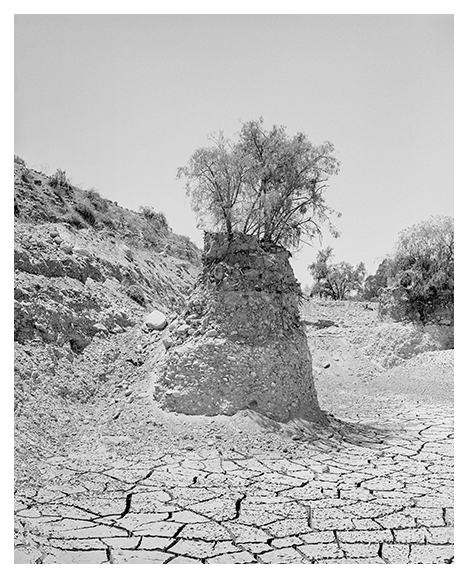
You refer to territory as the space you have explored and photographed. When does territory become landscape? What differences and/or similarities do you find between landscape and territory? What notions of landscape do you work with?
I begin by conducting visual research that helps me determine where I should focus my attention. This research involves reviewing previous works by other artists, as well as exploring documentaries and virtual tours through Google Maps to better understand the territory and identify areas of interest. Trips, such as the one to Atacama, are subject to specific deadlines, so I have a general idea of how long we will be in each place. This allows me to organize my work in the territory and gain an understanding of the landscapes before arriving. The images that emerge from this research often inspire initial ideas or preconceptions, which sometimes lead to productive outcomes and other times allow me to make unexpected discoveries.
Territory and landscape always go hand in hand, but territory transforms into landscape when I observe it and perceive it as fragmented, allowing intuition to participate in the photographic act. However, research is always present in this act, guiding certain aspects, such as limiting the sectors through which I move physically and visually. This represents an initial form of understanding that captures the contours of the territory without fully knowing or comprehending them. Within that space exists a zone of free movement in which the landscape reveals itself as a fragmented experience, evoking both rational and emotional sensitivity in me. It is at this point that a deeper understanding of the entire territory begins to take shape, forming connections with prior knowledge and accumulated perceptions. At the same time (as I’ve already mentioned), new and often unexpected elements arise that challenge the same preconceptions and present themselves without clear resolution. In this space, intuition and the ability to seize the opportunities the landscape offers play a fundamental role, as they guide the creative process and allow for the exploration of what has not yet been fully understood or articulated.
And what photographic works served as a reference for Valle?
Reflecting on this question, I realize that my work is influenced by multiple references (not only photographic ones) that operate on different levels and take on various dimensions, some more direct than others. Many of these references have shaped my emotional state, helping me approach the subject with a specific mindset, while others serve as reference points that inspire my perspective. I have become more aware of this on my second trip, made in 2024, than during my visit to the Huasco Valley in 2022. Additionally, some references help me understand the themes explored by other artists, see how they have approached them, and examine the methodologies they have employed.
I have discussed and reviewed the work of Gaspar Abrilot, Javier Aravena, Constanza Bravo, Bruno Giliberto, Cristóbal Olivares, Celeste Rojas Mugica, and Marcos Zegers—Chilean photographers with different approaches to mine, who have recently explored contemporary landscapes in northern Chile from various perspectives. With those I’ve had the opportunity to speak with, it has been enlightening to understand how they experienced the subject, listen to their recommendations, and learn more about their work and vision. I have also reviewed the work of Catalina de la Cruz and Enrique Zamudio, particularly their approach to photography and the printing process, as well as the collaborative work of Xavier Ribas and Ignacio Acosta in northern Chile.
Among the many photographers whose work has long captivated me, whether for their aesthetic approach, process, or the final manifestation of their work, are Guido Guidi, Geert Goiris, Michael Schmidt, Takashi Homma, Bernhard Fuchs, John Gossage, and the collaborative projects of Taiyo Onorato and Nico Krebs, to name just a few. I recall two exhibitions I visited between 2019 and 2020: A Handful of Dust by David Campany in Toronto and a show by Raymond Meeks in San Francisco. What I found most appealing about both exhibitions was the way the works were presented and the variety of materials used.
I have also long admired Andy Goldsworthy, especially his relationship with, understanding of, and interaction with the landscape—observing its details, its life, its evolution, and its absences—allowing these elements to become the core of his work.
Music also plays a fundamental role in helping me enter a particular state of mind and reflect on these works. Music by The Necks, William Basinski, and H. Takahashi are examples of instrumental compositions full of beauty, unique atmospheres, and a sense of uncertainty and tension that resonate with me. These types of compositions often accompany me in the studio when I need to concentrate on the work.
I also recall that during that time I was reading several books that explored the themes of walking and traveling: From Here to Tibet, a dialogue between Hamish Fulton and Michael Höpfner, An Episode in the Life of a Landscape Painter by César Aira, and Nuevas derivas by Jacopo Crivelli Visconti.
And of course, I frequently watch documentaries that explore the political history of Chile, as they provide essential context for understanding the evolution of these territories and their society.
On the other hand, in September 2024, I visited the Atacama Photographic Archive at the National Library of Chile in Santiago. I found interesting material, mainly related to mining. The visit provided me with several references that may influence the direction of my work and could lead to new explorations during my next trip in March 2025.
I think all this—and much more—can be understood as references to which I continually return. However, none of these directly relate to Valle or the rest of the work I am doing in the Atacama Desert, but rather to the entire process.
Based on your work with these references and on the photography you have done so far, as a previous experience before creating each new project, how important is it for you to propose a perspective that provides a different way of seeing the places and objects you photograph? To what extent could the visual construction of your projects challenge the contemporary representation of the territory?
These are topics I find interesting and worth questioning but challenging the contemporary representation of territory is not my main goal. I do not seek to offer a definitive view, but rather to present my own perspective (another view) that may or may not align with others, and that may or may not be understood or shared. I am interested in both the process of creating the work and the final piece, which, for me, can take many forms. Similarly, I tend to believe that a work is never truly finished. Works can be interpreted in many ways, from different perspectives, and as a creator, I too evolve, just as the interpretation and presentation of the work changes over time. I find this fluidity and ambiguity fascinating: the ability to question, approach, and experiment with the work, much like the landscape that evolves while retaining a certain history that informs its changes. This is why I consider my work not to be documentary, although it certainly draws elements from the genre.
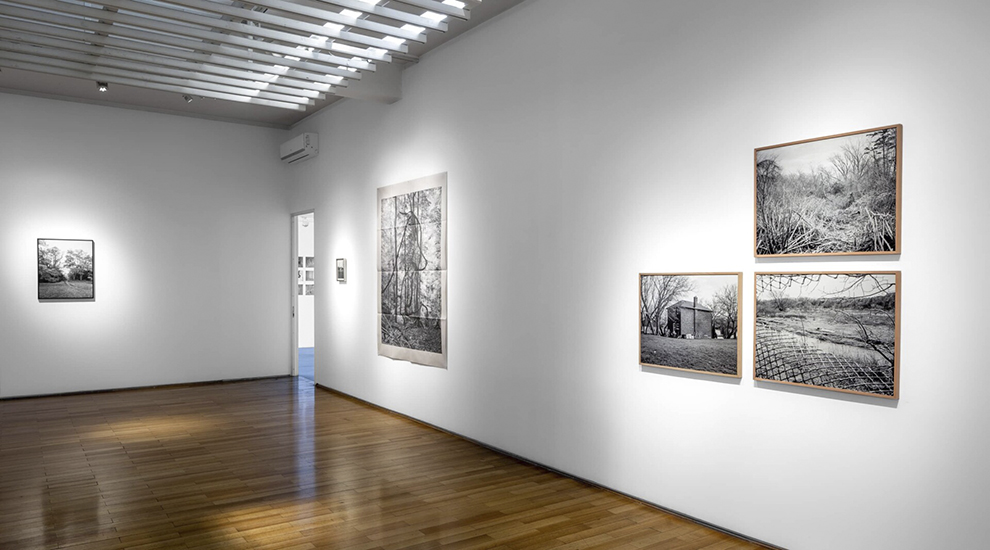
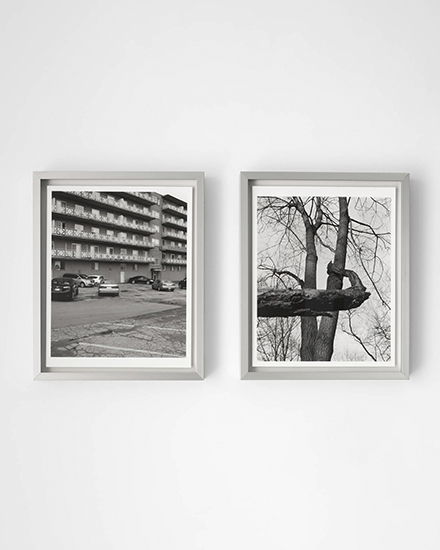
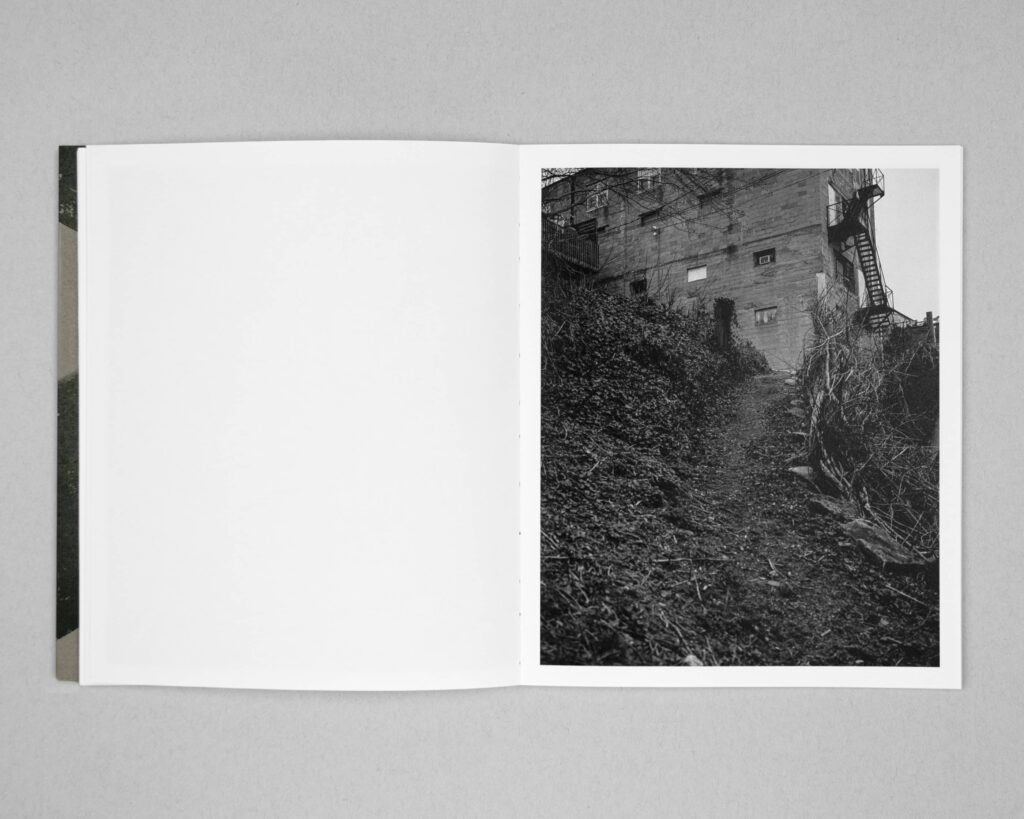
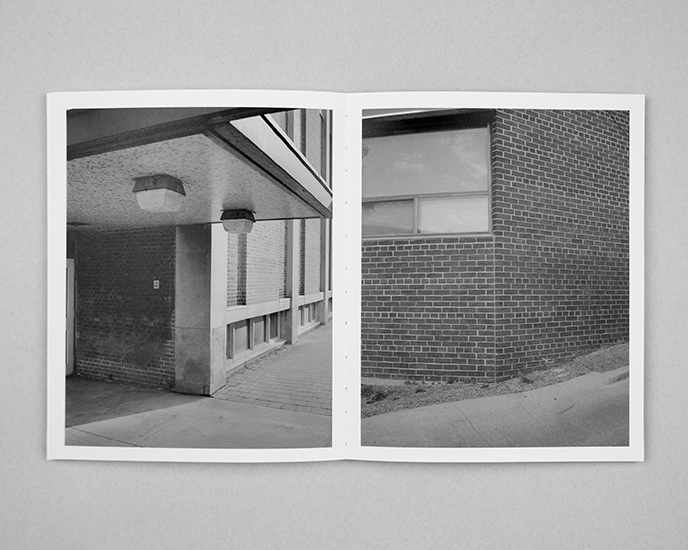
In Frequency (2020-2023), I can sense the tension of a world without humans, a tension much more disturbing than the one I find in Valle in the face of that absence. In this project, you convey a feeling of escape, of premature abandonment in the face of a singular event that has just occurred. It seems that the reception of the images that make up Frequency is closely related to the year in which you began photographing, a year marked by the shared trauma of the pandemic. How did you carry out this project? How did your work methodology vary over the three years it took you to complete it, and how did that process advance alongside the evolution of the crisis caused by the pandemic?
Indeed, that tension is palpable and arises from the emotion of the moment. These are different contexts and experiences than those I have lived in Atacama. However, I believe there is a shared perspective at play. Frequency delves into conflicts that are, at times, almost imperceptible but deeply meaningful
Frequency developed organically, initially without the intention of forming a structured project. Instead, it emerged from the constant act of observing and creating a personal escape or means to channel tension within the environment. As I reviewed the results and reflected on where my focus was, the collection of images began to take shape. What began as a process guided by intuition gradually evolved into something more deliberate and intentional. The project lasted three years. For the first two, the focus was on photographing, developing, scanning, and enlarging in the darkroom. In the final year, the emphasis shifted toward editing and refining the conceptual framework of the work.
Although Frequency evolved alongside the progression of the pandemic, I do not consider it a project about the pandemic itself. I made a conscious effort to avoid including anything that would directly link it to the pandemic. For me, the project is more about our way of life, our social dynamics, and the patterns we follow—elements that became more apparent during that particular moment in history but have always been present and will continue to shape our future.
Based on your observations and experiences photographing urban centers, what would cities become if the purpose for which they were built were disrupted? Are we, with Frequency, facing a post-apocalyptic vision? And what role would nature occupy in this transformation?
Frequency is not a post-apocalyptic vision, although there may be visual references to that theme and certain strategies employed to underline specific ideas.
For me, some cities will end up becoming ruins. There are already places around the world that have been abandoned, either due to climatic, economic, or conflict-related factors, and there are cities that neglect their heritage by replacing old structures with new buildings that lack long-term vision. In that context, capitalism and consumer culture often take precedence over history and functionality. Unfortunately, I tend to believe that, in many cases, when a city loses its purpose, it will become little more than a vestige, abandoned to decay and forgotten, while nature, in its resilience, will inevitably reclaim that space.
What do you think is the role of art in the general crisis (ecological, economic, social, political, etc.) that we are experiencing? Should artists be activists in the issues they address? How do you position yourself in this regard?
Each person’s perspective inevitably has a political dimension, though it is often expressed through different sensibilities. However, I don’t think we all have to conform to the traditional idea of what it means to be an activist.
The images I produce may not appear political, social, or ecological at first glance, but these themes are subtly woven into my work, which always involves a political act marked by a constant form of resistance: seeking freedom through the act of creation, independent collaboration, self-publishing, the use of available resources, and the flexibility or limitations this offers—aimed at enriching my creative process as well as provoking questions and inviting dialogue.
I understand On Trial as an organic project enriched by several series on the same subject: “the social, economic, and geographical study of the landscape.” The last of the four series was published in 2022. Why did you conceive On Trial as a fragmented project in which you publish brief notes? What is the reason for this editorial gesture? Is this a project designed for experimentation? Are you planning to publish a book containing all the series?
On Trial is not necessarily a finished project. When I was 17, I lived in the United States for less than a year with a green card and permanent residency. However, I did not connect with the culture and eventually returned to Chile. Over the years, I lost that permanent residency, as I had no desire to return at the time. In 2008, I had the opportunity to return and received a job offer in the United States and Canada. We made a family decision to move to Canada. From there, between 2009 and 2019, I traveled several times to different parts of the United States, both for work and family trips, during which I had the opportunity to develop more formal photographic work. On each trip, I did photographic work but with very poor results. However, this experience helped me direct the photographs made in 2019, which are part of On Trial. Like those fragmented trips, my experience with that country and its various territories has also been fragmented. I hope to explore this further in the future, but for now, the project is on hold.
The publications Notes (On Trial) — 01, 02, and 03 — can be considered, in a way, my b-sides. These images allow me to better understand the dynamics of my travels. They serve as visual notes, often producing unexpected results that invite me to experiment. Making these works from an editorial point of view allows me to see them from different perspectives and fosters a dialogue, between the works themselves and with myself. I currently have more than ten similar publications in this format, most of which are unique copies that will never be published. Some contain twenty photographs, others only three.
How to cite:
BOISIER, Ros, Interview with Cristian Ordoñez: “My work involves a political act marked by a constant form of resistance”, LUR, 20 February 2025, https://e-lur.net/dialogos/interview-with-cristian-ordonez
Cristian Ordóñez (Santiago, Chile, 1976) has lived in Canada since 2008. His work combines author photography, graphic design, and publishing, practices that he articulates on printed matter through self-managed projects and collaborations with artists, academics, architects, and organizations. He uses photography to observe territories, near and far, collecting impressions of the world and gravitating towards the parallels and dialogues between the meanings and uses of place, memory, and the idea of belonging. His work has been exhibited internationally, and his books are part of permanent collections in institutions such as the National Gallery of Canada, MoMA, the San Telmo Museum, the Art Gallery of Ontario, and the National Library of Australia. In 2023, he was awarded the Land Artist Residency Program by OMNE – Osservatorio Mobile Nord Est (Italy), where he is currently in residence. In 2002, he won the Edward Burtynsky Grant (Canada).
Ros Boisier (Temuco, Chile, 1985) is a visual artist, editor and researcher specializing in photography. In her projects, she reflects on contemporary human challenges through writing and experimentation with the possibilities of representation and perception in photography and video. With a Master’s degree in Art Production and Research and a degree in Audiovisual Communication, she also writes about photography and photobooks. She is the author of the photobooks Inside (Muga / Ediciones Posibles, 2024) and Pérdida (Muga / Fluq, 2015) and director of research on the reading experience of photobooks, the result of which was the book De discursos digitales, instantes y fotolibros (Muga, 2019). At LUR she writes interviews and reviews of photobooks.
Translated by Cristián Ordóñez. Copy edited by Érika VItela.
Register to access this content!
Log in and you will be able to immediately enjoy the whole LUR experience. No charge. Open an account and you will have unlimited access to our photography and visual culture content.
If you have already logged in, you just need to sign in
