The great challenges presented by the covid-19 pandemic forced an immediate and unprecedented response from cultural institutions in 2020. The temporary closure of physical facilities as part of lockdown measures dramatically affected artistic programmes, as well as essential economic and structural frameworks. On the one hand, the pandemic forced core institutional activities to stop and traditional forms of exhibiting to close. On the other, lockdown also offered a chance to rethink how collective networked spaces could be utilised for the exchange of culture and art, as well as an opportunity to consider the function and role they perform.
Fighting virality with virality
When museums and photography centres closed their doors during the first months of 2020, institutional attention immediately turned to online audiences. An initial panic produced a surplus of online content aiming to communicate that museums were still very much alive and could be ‘visited from home’. With the doors shut, exhibitions inaccessible and events cancelled, galleries and museums saw online activity as a means to remind audiences they still existed.
Even if the networked image is one of the main assets of digital culture (a culture that expanded even further during lockdown),[^1] most photography institutions failed to identify it as a cultural and artistic form of image production worthy of investigation, instead using it merely as a means of communication. The pandemic image became the circulating surrogate of the physical experience of the museum, often accompanied by the hashtag: #museumfromhome.

As had already happened, the majority of museums were unable to acknowledge the specificities of online spaces in order to recognise the networked space as an expanded context for discussing and exhibiting art. They had to learn that the quality or quantity of their content was not necessarily correlated to online visibility; social engagement with networked participants needed to be pursued through interactions on social media, websites and emails. Paradoxically, photography museums experienced how images operate online not by critically analysing them, but directly being exposed to the impact of their dependence upon them.

The pandemic image was at first a naive attempt to simulate the museum in the digital realm, using digitality as a tool to capture the attention of audiences with Instagram and 360° tours. Indeed, the idea of a distributed high quality ‘photocopy’ of the exhibition space was not new. Its most famous precedent was the promise of a universally accessible three-dimensional online simulation of the exhibition space, launched in 2011 by the Google Arts & Culture project (GA&C). Google photographed and mapped dozens of museums, only to become increasingly censored over the years, as copyright claims and intellectual property laws became onerous, effectively reducing these spaces to digital ruins and surreal experiences.[^2] The attempt by photography institutions to become part of such projects, automatically inscribed them in the problematic realm of platform capitalism (Srnicek 2016). By becoming part of corporate initiatives like GA&C, institutions become actors working for the company’s platform, becoming enmeshed in a number of serious issues about artwork reproduction rights and monetization; in addition to the significant resources required to participate; the online traffic redirection from the institutional websites to Google’s platform; the monetization of audiences’ attention; and the lack of control the institutions have over how artworks are aggregated can be used on apps developed GA&C.[^3]

Zoom aesthetics
Zoom calls came next. The video chat instantly became the space for public and private social interactions and institutions quickly adopted the format to interact directly with their audiences. The pandemic image became a grid of names, nicknames and a few faces, half-moving, half-paying attention, filling the screen at different network speeds, at different pixellation rates, glitching and freezing. The Zoom image is a digitally imperfect networked portrait, a mosaic of usernames and on/off cameras and microphones, an assemblage of an unstable collective presence and absence. While bringing people together during a time of restricted mobility, the pandemic image of Zoom invades people’s homes and turns the domestic into something productive and public. It brings the work home and makes the home social. It not only catches the dishevelled hairstyles but highlights social and economic differences, the personal struggles of different individuals, inviting new modes of both representation and resistance. Virtual backgrounds, face filters, cameras turning off and mysterious aliases reveal new rituals and identities but also visualize the tension between submission to and control over technology –an intangible global space where private and public life, labour and entertainment take place.
For cultural institutions, the Zoom image also represents the possibility of reaching global audiences, the grids of names and portraits visualizing the presence of a networked community, distributed around the world – a possibility that already existed before the pandemic, even if largely invisible to many. Artist talks, conferences and educational programmes benefited most from the chance to interact in real time with their public while many museums and libraries opened up access to their collections, inviting people to read, watch and listen to their content for free.

Invisibility and fragility
Meanwhile, ‘real time’ exhibitions remained postponed or cancelled. While most photography institutions have explored and incorporated the knowledge exchange provided by the networked image through their communications and/or education teams, very few have engaged with the possibility of producing online exhibitions or adapting previous projects to the Internet. The technical and economic challenges that such endeavours present, as well as the lack of previous engagement from photography institutions with the exhibiting possibilities of networked culture, are some of the probable causes that left museums and galleries hesitant to engage with online spaces.
The lockdown unveiled a reality that was hiding in plain sight: the absolute dependence of cultural institutions on their physical facilities, collections and artistic programmes. Museums, art centres and galleries have consistently failed to grasp opportunities to update their roles as collectors and archivists of networked culture; a role that new organisations such as Know Your Meme or The Internet Archive have taken instead.
Only a few weeks after the introduction of pandemic mobility restrictions, many institutions were economically impacted and forced to take drastic measures. Particularly in the United States and the United Kingdom, where institutions’ reliance on ticketing income is particularly high, museums started to cutstaff.[^4] The invisible image of covid-19 is the redundancies of educators, gallery attendants, part-time student workers and gift shop employees. Freelancers, precarious workers and the artists whose exhibitions and events were cancelled, found themselves in the most difficult and unsecured position. The pandemic posed a threat to the processes that allow photographers and artists to create images, corroding the foundation of the whole art system, tearing apart institutions, and destabilizing the regular ways art and artists exist.
Protests and strikes against mass redundancies have been carried out, exposing the salaries of senior management[^5] and highlighting the disproportionate impact of layoffs on staff from minority backgrounds. A criticism that gained further credence in the time following the circulation of the recording of George Floyd’s murder. Building on existing demands to confront the systemic racism present in western cultural institutions, this led to many cultural institutions publishing their commitment to diversity and against racism on social media, and others to launch internal decolonising reviews of their structures, collections and programmes.[^6]
The announcements of staff cuts by cultural institutions hasn’t stopped. While many emergency funds have been established across the world to help sustain the cultural field, it is unclear how many institutions will be impacted in the long-term, which ones will be forced to close entirely, and how many others will adapt and change as an effect of coronavirus. The deep impact of the lockdown and the invisibility of the pandemic image resurfaced the systemic racism of the western art world and its economic fragility, due to the effect that neoliberal economics have on it.
Net art reprise
While large and established institutions were unable to find ways to engage with the network and the internet and create alternative spaces for art and culture, a few galleries and smaller organisations were able to learn from the promise of online circulation that Net Art had enabled. They approached artists and curators working with digital spaces and incorporated their projects to expand and update their own programmes. However, the pandemic image was not simply a revival of 1990s Net Art; it evolved into a completely new networked landscape – a more centralized and monetized one, controlled by corporate and governmental interests and structured by complex algorithmic logic and mechanics. Live performativity, social exchange and global access are among the most interesting assets that contemporary networked technology has to offer, in a rapidly evolving scenario where complex politics and expanding extractive economies lay beneath the surface of rich digital aesthetics. A few organisations, festivals, galleries and artists – smaller in size and thus greater in agility – launched new programmes and projects that aimed to take advantage of larger dispersed audiences and the possibilities that the visual landscape of the pandemic image could offer.

Upstream Gallery, which has regularly exhibited the work of some of the most relevant digital artists since 2003, launched a series of online exhibitions of Net Art. Using the open platform common.garden, the gallery was able to rapidly react and provide a series of exhibitions “developed, curated and participated by artists that belong at the top of digital field”.[^7]
The Online Museum Of Multiplayer Art explored the social aspect of multiplayer mechanics in a low-res looking playful exhibition space created by Carnegie Mellon University professor and game maker Paolo Pedercini. Visitors could customize an avatar, communicate and play together in the digital rooms of a museum that instead of exhibiting artwork, aimed to provoke them. Each of the spaces at oMoMA conditioned social interaction in a very particular way, turning random encounters with strangers into online collaborative happenings. Active participation of the visitors was encouraged but not mandatory to experience the joy and poetics of social interaction.
The London-based Arebyte gallery, which since 2013 “invites multiple voices in digital cultures to create immersive installations and online experiences” explored the possibilities of subverting a traditionally unwelcome feature of the internet: the pop-up window. Real Time Constraints took the form of a browser extension, a small programme that gets installed on web browsers. The exhibition would interrupt relentless pandemic screen time to show the work of the artists in a global synchronized manner, no matter the location and time of the viewer, proposing a benevolent networked worldwide intervention.
Roehrs & Boetsch, “the first and, to date, only art gallery in Switzerland to devote its programme to exploring digitalisation and its implications for society” closed their physical location to launch an experimental mobile exhibition in the form of a fitness app to download onto a smartphone. Aptly called FitArt, “the application is designed as a series of workouts, featuring exercises created by artists”.[^8] An ironic and critical approach towards both the isolation fitness training platforms and the melancholy of physical art consumption that surged when gyms and museums both shut down.

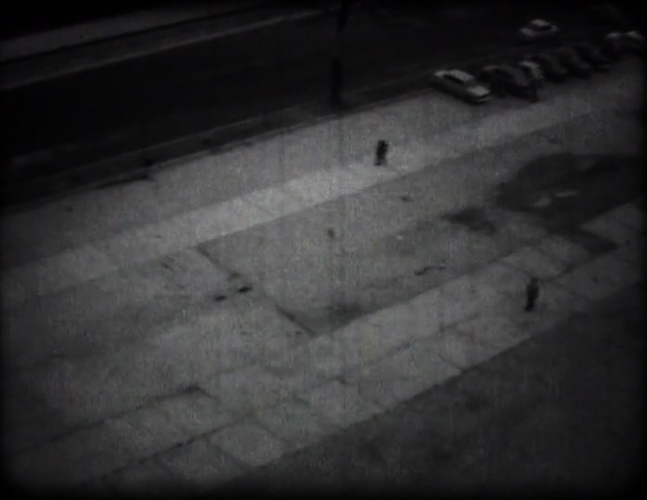
Among the European photographic institutions, Foam in Amsterdam and Format Festival in Derby both dealt with the impossibility of opening their doors in a creative way, exploring the possibilities of online exhibiting. While Foam turned their yearly Talent exhibition into a meticulously designed dynamic website, the UK festival experimented with online multiplayer 3D rendered spaces. During the lockdown, photographs of empty city streets became ubiquitous on the media. The documentation of the empty urban areas ignored the networked life that, meanwhile, was flourishing in digital spaces. Postcards from Quarantine by Adonis Archontides addressed his own virtual wandering in computer game worlds during lockdown. The documentary project reflects on the spike in playtime experienced over the pandemic – an opportunity for the gaming industry that initiated the #PlayApartTogether campaign, supporting the World Health Organization’s message to stay at home, while encouraging the use of their products even further.
These few examples of artworks and exhibitions are far from exhaustive, but are indicative of some approaches that took advantage of networked visual cultures created by artists and organisations while in lockdown. The pandemic image revisited and updated Net Art which, when first practiced, lacked global networked audiences but enjoyed a less centralized and monetized playground instead. The pandemic image took ownership of internet platforms and technologies – both misusing them and rethinking them. It didn’t try to simulate physical space; or attempt to approximate ‘real time’ experiences. It wasn’t interested in 3D scans of the gallery and 4K images of the walls. It insinuated online and digital spaces, and worked within them, embracing and experimenting with network culture rather than using online platforms of exchange as tools for communication and circulation.
The vaccinated image – epilogue
The pandemic image was already there waiting to be unleashed. Its infrastructures, aesthetics, politics and practices existed before covid-19 hit the world; its cultural potential was already known. In line with the turbo–accelerated contemporary experience, it suddenly became the most relevant feature of the only available social culture during the lockdown –networked culture. The wide range of engagement of cultural institutions with it relied on a series of elements: the scale of the organisation and its flexibility to react, its economic situation and its previous research and familiarity with it.
Cultural institutions might have increased their website traffic and gained new followers on social media over the pandemic but it is unclear, to say the least, how offering their audiences access to the #museumfromhome will help them to recover in the upcoming post-pandemic scenario which will see a reduction in tourism, funding struggles and likely an ongoing aversion towards indoor events. The organisations that instead took advantage of the global audiences to launch programmes that explored the networked image – precisely when the network was the only shared space available – will face the same struggles but from a different position. New audiences might have been reached, traditionally diminished artistic communities highlighted and supported and, with them, new practices and cultural values exchanged; while still acting as mediators between practitioners and the public. The initiatives launched during the lockdown that will manage to remain and be relevant in the post-covid landscape will attest which of the institutional approaches – if any – has been successful in overcoming one of the greatest challenges that cultural institutions have ever faced.
References
SRNICEK, Nick (2016) Platform Capitalism, Cambridge,Polity Press
For more images in relation to this essay, please visit the collection Curating The Pandemic Image by Marco De Mutiis.
How to cite this source:
URIARTE, Jon, DE MUTIIS, Marco “Curating the pandemic image”, LUR, 26 May 2021, https://e-lur.net/investigacion/curating-the-pandemic-image
[^1] On this visit COVID-19 Pushes Up Internet Use 70% And Streaming More Than 12%, First Figures Reveal by Mark Beech.
[^2] Mario Santamaría has been documenting the blurred reproductions of the copyrighted artworks on his series The Righted Museum.
[^3] Various research projects and articles have analysed art collections hosted on Google Arts&Culture, as well as the potential benefits and problems for a museum in joining the platform:
- On The Museum of the Infinite Scroll: Assessing the Effectiveness of Google Arts and Culture as a Virtual Tool for Museum Accessibility, Megan K. Udell analysed GA&C’s lack of effectiveness to give access to organisations to digital technologies. Cuberis, a company working on digital strategies for museums, wrote Should your museum partner with Google Arts & Culture? recommending museums to save their best content for their own websites. On Digital cultural colonialism: measuring bias in aggregated digitized content held in Google Arts and Culture Inna Kizhner et al. analysed the collections hosted on G&AC and documented a lack of balance between countries, as well as between capital and provinces and a prominence of art from the 20th century giving evidence to previous claims of digital colonialism. Catherine Shu wrote Why inclusion in the Google Arts & Culture selfie feature matters on how GA&C’s selfie app reflected on its own the systemic racism.
[^4] Announcements of staff cuts on MOMA and TATE can be found on MOMA Ends All Museum Educators Contracts by Valentina Di Liscia, as well as on Tate will cut 120 jobs to ‘survive crisis’ by Gareth Harris March 19 2021. While USA and UK institutions were first, it is not to say that institutions relying on public funding in other countries will not have to face layoffs in the short or mid-term as well, as the economic crisis provoked by the pandemic is likely to heavily affect government support to arts and culture.
[^5] Visit the Instagram account https://www.instagram.com/d.o.a.u.k.
[^6] See the article “The George Floyd Protests Spurred Museums to Promise Change. Here’s What They’ve Actually Done So Far” by Taylor Dafoe & Caroline Goldstein.
[^7] On this visit Upstream Gallery launches online platform upstream.gallery
[^8] Visit FitArt to download the app.
Jon Uriarte (Hondarribia, Spain, 1980) is a curator, educator and artist working with networked visual cultures. He is curator of Getxophoto Image Festival and The Photographers’ Gallery digital programme.
Marco De Mutiis (Trento, Italy, 1983) works as Digital Curator at Fotomuseum Winterthur, and is a researcher with the Centre for the Study of the Networked Image at London South Bank University.
Marco de Mutiis and Jon Uriarte launched Screen Walks, a new collaborative programme between Fotomuseum Winterthur and The Photographers’ Gallery in April 2020. Screen Walks is a series of streams inviting artists to experiment with networked strategies while exploring the digital spaces where their core artistic practice takes place.
“Curating the pandemic image” is part of the research itinerary The pandemic image, led by Jon Uriarte.
Register to access this content!
Log in and you will be able to immediately enjoy the whole LUR experience. No charge. Open an account and you will have unlimited access to our photography and visual culture content.
If you have already logged in, you just need to sign in